
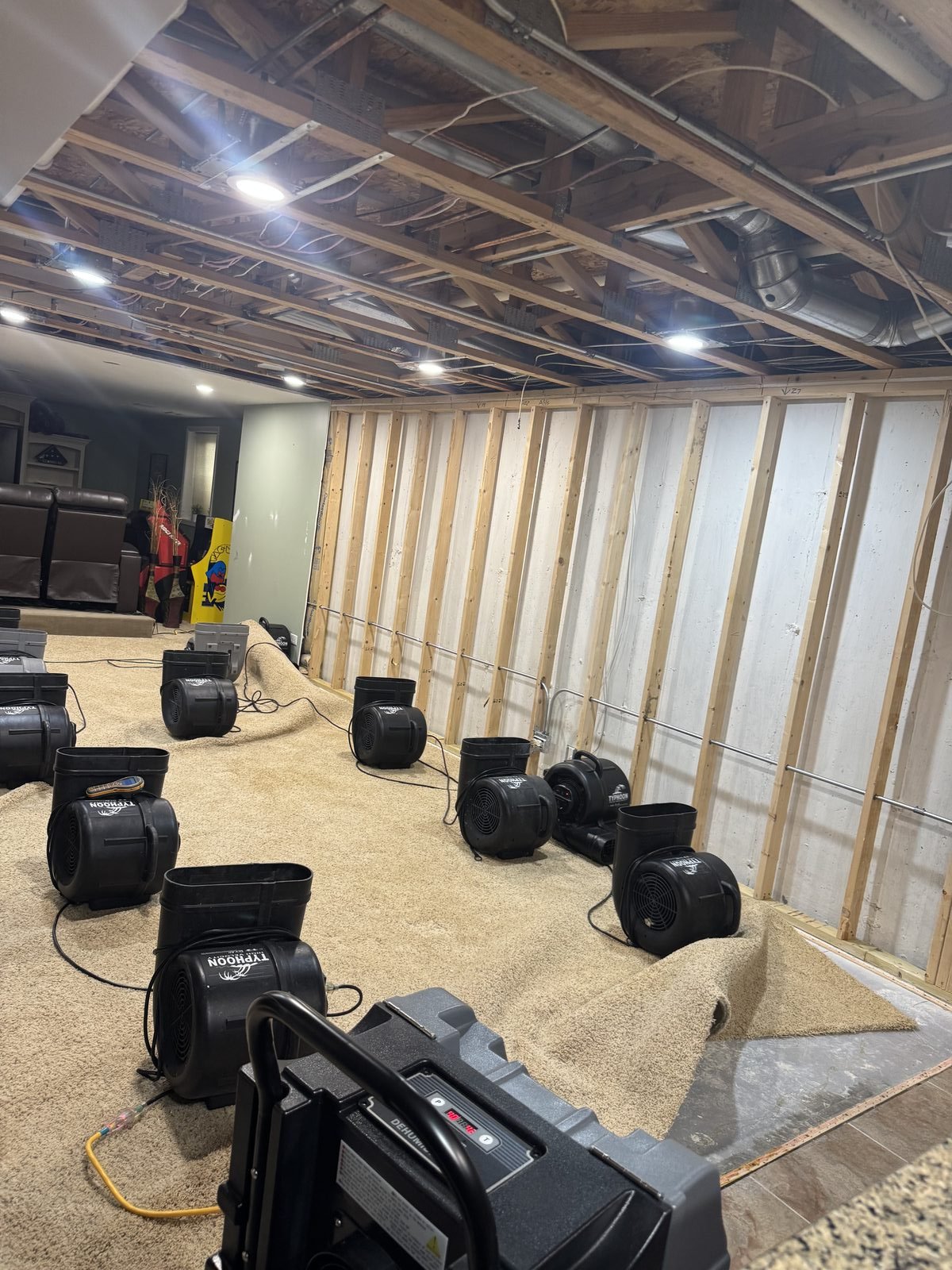
Drying a gutted basement room on a Valor job
Flooded Basement Cleanup in Lake County, IL
Sump pump failure, heavy-rain seepage, a burst water heater or a sewer backup. We pump the water out, remove what can’t be saved and dry the basement to verified readings. Answered 24/7 across Lake County.
- Answered 24/7
- On site in 30–60 min
- Sump and sewer backup cleanup
- Moisture readings logged
Water in Your Basement Right Now?
Stay out of standing water if it may be touching outlets, cords or appliances. If you can reach the breaker panel without stepping in water, shut off power to the basement. Then call (224) 362-0309. We answer 24/7, and a crew typically reaches Lake County homes in 30 to 60 minutes.
Basement water removal is part of the water mitigation in Lake County we do from our Lake Villa shop: pumping, extraction, removing wet materials and structural drying, documented for your insurer.
Why Lake County Basements Flood
Lake County sits on flat ground laced with lakes, rivers and wetlands, and much of it has clay soil that drains slowly. Add spring snowmelt and summer cloudbursts, and basements take on water in a handful of ways:
Sump pump failure
A power outage, stuck float, burned-out motor or undersized pump lets groundwater rise through the pit, often during the same storm that knocks out power.
Heavy rain and groundwater
Saturated soil pushes water through foundation cracks, cove joints and window wells. Homes near lakes and the Des Plaines and Fox River watersheds see this most.
Sewer backup
When municipal or private sewer lines are overloaded, wastewater can come up through floor drains. That is contaminated water and needs professional sewage backup cleanup.
Water heater failure
Tank heaters corrode from the inside and can dump their full contents at once, often into a finished utility area.
Burst or leaking pipes
Frozen lines near rim joists and failed washer hoses can run for hours before anyone goes downstairs.
Not sure which?
We find the source during inspection. The cause decides the cleanup method and what your insurer will ask about.
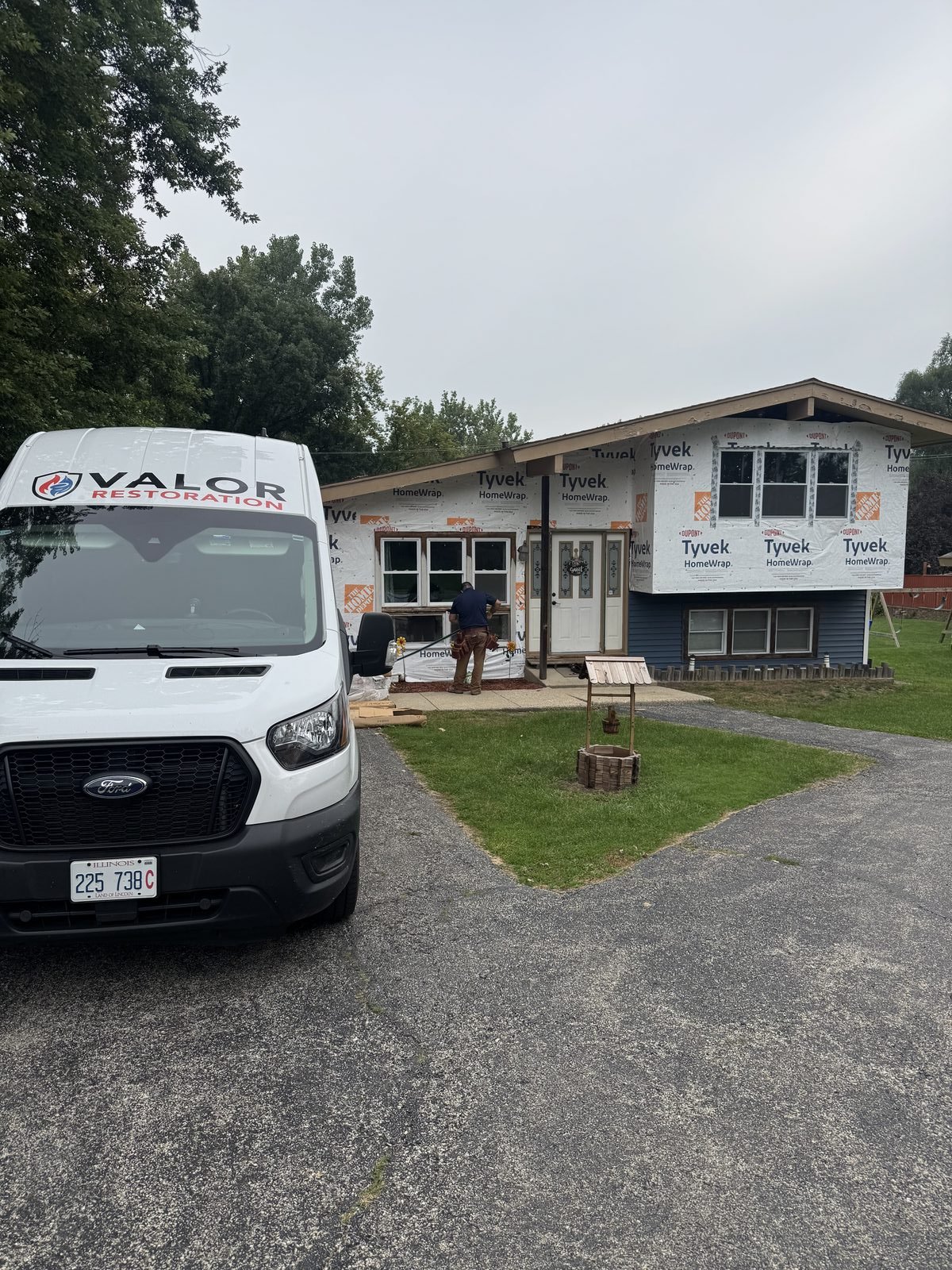
Your First Hour After a Basement Flood
What to do while the crew is on the way. Skip any step that isn’t safe.
Put safety first
Don’t walk into water that may be energized. Shut off basement power at the panel only from a dry spot. Smell gas? Leave and call the gas utility.
Stop the source
Close the main water valve for a plumbing leak, or the water heater’s supply valve. Stop running water and flushing if a sewer backup is suspected.
Document
Take photos and video of the water level, damaged items and the likely source before anything is moved.
Protect what you can
Lift belongings, rugs and boxes off wet floors. Wear gloves and boots, and treat floodwater as dirty.
Call for help
Call (224) 362-0309. Fast extraction and drying limit the damage and lower the chance of mold.
Our Flooded Basement Cleanup Process
Every basement gets the same sequence, so nothing is closed up wet and your insurer sees each step.
- Inspection
Identify the water source, its category and how far moisture has wicked into walls and floors.
- Water extraction
Pump out and remove standing water from concrete, carpet and pad.
- Removal of wet materials
Remove pad, drywall, insulation and trim that can’t be dried or that touched contaminated water.
- Cleaning
Clean and treat affected surfaces, especially after sewer or floodwater.
- Drying
Air movers and dehumidifiers run until the structure is dry.
- Moisture readings
Daily meter readings confirm progress. Equipment comes out only when targets are met.
- Documentation
Photos, moisture logs and a written scope for you and your insurer.
- Rebuild
Once the basement is dry, the same team can replace drywall, trim and flooring.
“Tyler and his team are absolutely amazing, they spent all week pumping 5 ft of water out of my basement after my sump pump failed.”
Rated 4.7 from 40 Google reviews. Read them on Google
Flood Damage Repair Services
Our flood damage repair services follow the same order on every job: extract the water, dry the structure to verified readings, then repair or replace what can’t be saved. Finished basements usually need the most work, because carpet, pad and the bottom of the drywall soak up water first.
When drywall, insulation, trim or flooring has to come out, our team handles reconstruction after fire or water damage once the space is dry. For a leak upstairs, see 24-hour water damage repair. If a fire started it, see fire and smoke damage restoration.
Will Insurance Pay for a Flooded Basement?
It depends on the cause and your policy. We can’t promise coverage, but here is the general picture:
- Sudden, accidental plumbing failures, like a burst pipe or a failed water heater, are commonly covered by homeowners policies.
- Sewer or drain backup and sump pump overflow are often covered only with a separate endorsement.
- Surface flooding and river water typically require a separate flood insurance policy.
- Gradual seepage and long-term leaks are frequently excluded.
Check your policy or ask your agent. Whatever the cause, we document the loss with photos and moisture readings.
We work with all major insurance companies





Valor works with all major insurance companies, including Allstate, Farmers, Liberty Mutual, Nationwide and USAA.
Basement Flood Cleanup Near You in Lake County
Searching for basement water removal near me? If you’re in Lake County, a crew typically reaches you in 30 to 60 minutes from 1600 N Milwaukee Ave in Lake Villa, day or night. These town pages cover local flooding and the crews who serve them:
Flooded Basement Questions
Call or text (224) 362-0309 with anything else.
How fast should a flooded basement be cleaned up?
As soon as possible. Mold can begin growing within 24–48 hours on wet materials, so extraction and drying should start quickly.
Is it safe to go into my flooded basement?
Not if water may be touching outlets, cords, or appliances. Shut off power from a dry location if you can, or wait for help.
Can wet carpet in the basement be saved?
Sometimes. Carpet wet from a clean-water leak that is caught early can often be cleaned and dried in place. Carpet and pad soaked by sewer backup or floodwater are usually removed.
Does homeowners insurance cover a flooded basement?
It depends on the cause and your policy. Sewer backup and sump overflow often need an endorsement, and outside flooding usually needs flood insurance. Check your policy.
How long does it take to dry a basement?
Commonly several days, depending on materials and how long the water sat. We track readings daily.
What areas do you serve?
Lake County, IL communities including Lake Villa, Gurnee, Grayslake, and nearby towns. Call (224) 362-0309.
Which Lake County towns do you cover for flooded basement cleanup?
All 16 towns in our service area: Antioch, Fox Lake, Grayslake, Gurnee, Lake Villa, Lake Zurich, Libertyville, Lindenhurst, Mundelein, Round Lake, Round Lake Beach, Round Lake Park, Third Lake, Vernon Hills, Wadsworth and Waukegan. See Gurnee, Grayslake or Round Lake Beach for local details.
Basement Flooded? Call (224) 362-0309.
24/7 flooded basement cleanup across Lake County, IL. A crew can be on site in 30 to 60 minutes.
Request a Basement Cleanup Estimate
Tell us what happened and where. If water is still rising, call now instead of waiting on the form.
During an active emergency, don't wait for a callback.
(224) 362-0309